The Best Time to Trade NQ Futures: 5,424 Trades, by the Hour
One hour makes most of the money. Trades entered in the 9 ET hour (the 9:30 cash open) made 58% of all the profit our NQ system has earned since 2011. That same hour has our lowest win rate, 35%. Those two facts together are the most useful thing we can tell you about when to trade Nasdaq futures.
The rest of this article is the proof. We took every trade our NQ book has made, 5,424 of them, and grouped them by entry hour and by weekday. You can run the same grouping on any TradingView export in a few minutes.
Whose trades are these (read this first)
These numbers are from our own book: six systematic NQ strategies run as one single-position portfolio. TradingView backtests, 2011 to 2026, one to three contracts scaled by volatility, commissions and slippage included, $1,000,906 net. The style is momentum and trend continuation, intraday plus one overnight model.
That matters. Our systems pick these entry times on purpose. So the data shows where our setups make money, not a free property of the NQ market itself. A different strategy traded at the same hours can look completely different. What you can copy is the method: measure your own trades by hour before you change anything. The numbers themselves are ours.
One hour pays for everything
Here is the profit, broken out by the hour each trade was entered.
| Entry hour (ET) | Trades | Win rate | Net P&L | Share of profit | Avg per trade |
|---|---|---|---|---|---|
| 9:00 | 2,548 | 35.4% | $579,793 | 57.9% | $228 |
| 10:00 | 872 | 41.1% | $24,368 | 2.4% | $28 |
| 11:00 | 412 | 48.1% | $95,393 | 9.5% | $232 |
| 12:00 | 203 | 48.8% | $28,062 | 2.8% | $138 |
| 13:00 | 189 | 43.9% | $29,191 | 2.9% | $154 |
| 14:00 | 210 | 47.1% | $17,532 | 1.8% | $83 |
| 15:00 | 105 | 55.2% | $31,755 | 3.2% | $302 |
| 18:00 | 885 | 56.7% | $194,812 | 19.5% | $220 |
These are the only hours our systems enter, so the table is complete. Nothing was dropped.
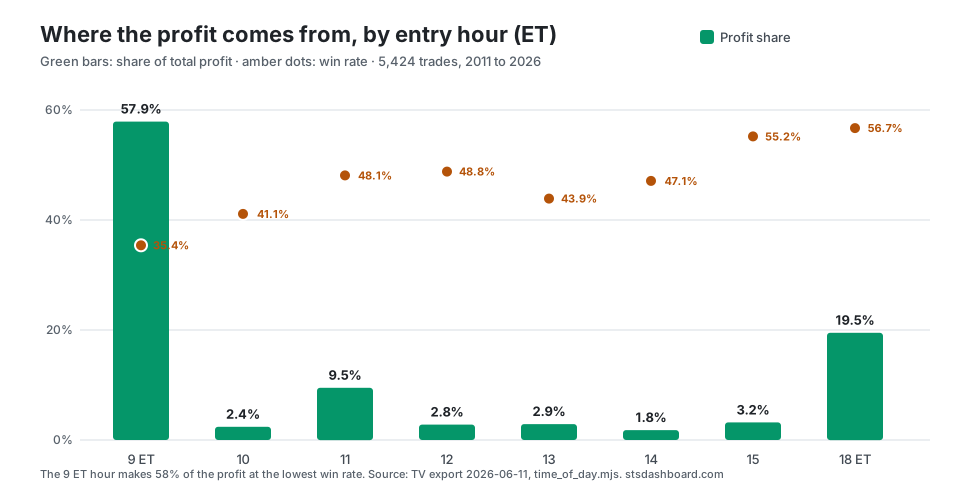
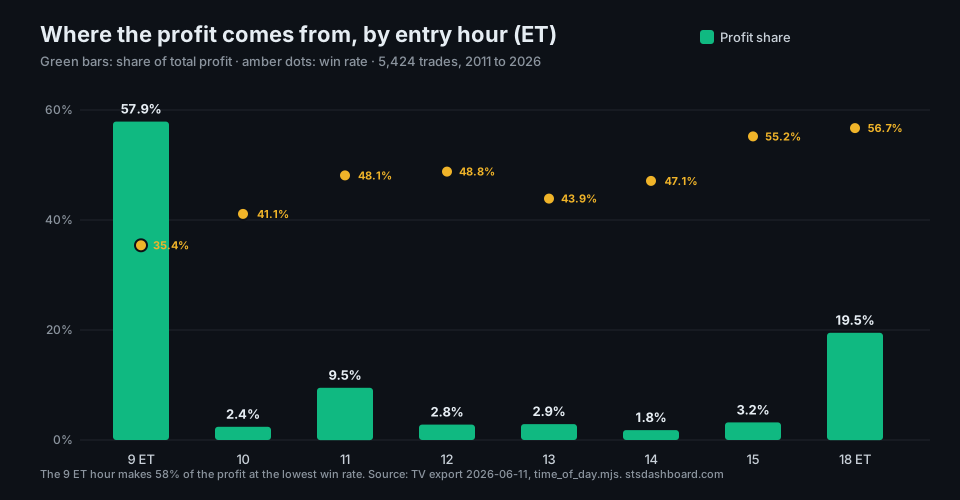
Three things stand out.
The open pays the most and wins the least. The 9 ET hour made $579,793 at a 35% win rate. The edge is not accuracy. It is payoff. A few opening drives run far, and that more than covers being wrong most of the time. If you trade the open and judge yourself by win rate, you will quit the best hour of your day.
The 10 ET hour is where profit goes to die. 872 trades, $28 each. That is barely above breakeven. The opening drive is usually done by then, and the afternoon trend has not started. We still take these trades because they set up entries we carry into better hours. On its own, this is the weakest window on the board.
The 18 ET reopen is the quiet second engine. That is 6 PM ET, when index futures reopen for the next session. Trades entered right after made 19.5% of all profit, at our highest win rate, 57%. Overnight drift is a known effect in index futures, and it shows up in our book right where you would expect. This is also the one busy window that lands after a normal workday, which matters if you cannot sit in front of the 9:30 open.
Friday is worth three Tuesdays
Now the same profit, split by weekday.
| Entry day | Trades | Win rate | Net P&L | Share of profit | Avg per trade |
|---|---|---|---|---|---|
| Sunday | 192 | 56.3% | $62,708 | 6.3% | $327 |
| Monday | 985 | 43.5% | $130,794 | 13.1% | $133 |
| Tuesday | 1,124 | 41.3% | $96,366 | 9.6% | $86 |
| Wednesday | 1,160 | 41.2% | $198,575 | 19.8% | $171 |
| Thursday | 1,105 | 41.7% | $219,161 | 21.9% | $198 |
| Friday | 858 | 42.1% | $293,302 | 29.3% | $342 |
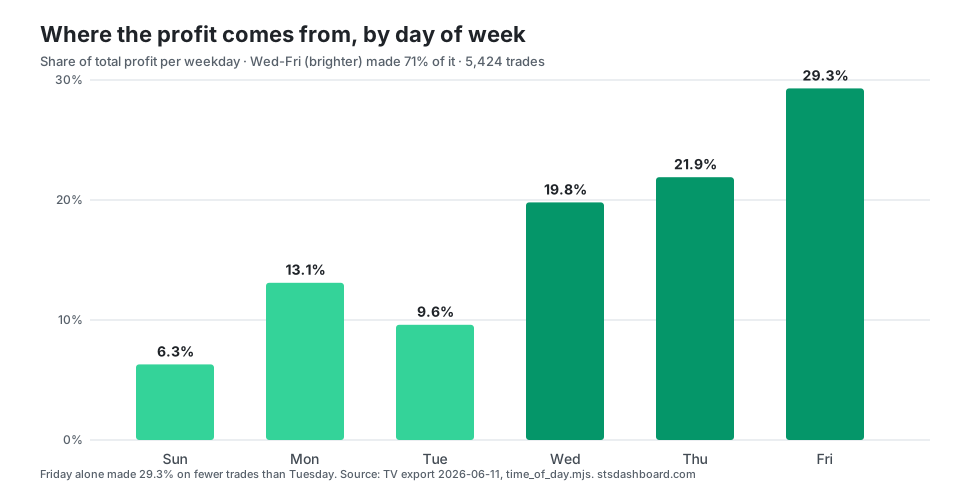
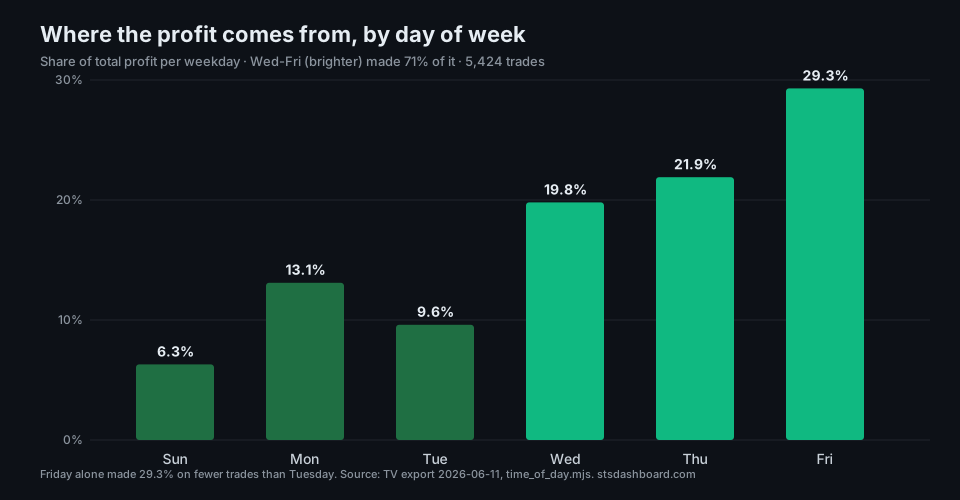
Wednesday through Friday made 71% of the profit. Friday alone made 29.3%, on fewer trades than Tuesday. Per trade the gap is wide: $342 on Friday against $86 on Tuesday.
We do not have a clean reason for it. The honest read is that trends which last into late week tend to finish the week, and our systems are trend-followers at heart. Monday and Tuesday still make money, so we keep trading them. We just stopped expecting them to carry the book.
One more split. Longs made 65.9% of the profit, shorts 34.1%. The market rose for most of 15 years, so a short side that still earns a third of the profit is doing real work in the down years.
Your NQ day is mostly made or missed in the first 90 minutes, and mostly in the back half of the week. Protect those windows. Stop giving the gains back in the dead 10 ET hour.
What this does not say
Be careful with the lesson here. This shows where our systems make money, not where the NQ market is easy. Our strategies were built to enter at these times, so the table cannot tell you that any 9 ET trade is good. Only that our 9 ET setups have been.
The thin rows deserve doubt too. The 15 ET hour shows a strong number on just 105 trades. That is the kind of result that vanishes out of sample. We treat anything under a few hundred trades as a hint, not a finding. And all of this is hypothetical backtest performance plus live tracking. Past performance does not indicate future results.
How we measured this
Instrument: CME Nasdaq-100 E-mini (NQ), $100,000 starting capital, no compounding. Size starts at one contract. The system scales to two or three when volatility allows. So the dollar totals already include whatever size was on. Data: the TradingView list-of-trades export from our live 6-strategy intraday book, 2011-06-16 through 2026-06-11, 5,424 trades, commissions and slippage included.
Method: group each trade by its entry timestamp (exchange time, ET) into hour and weekday buckets. Sum net P&L per bucket, then divide by total net P&L for the profit share. Win rate and trade counts are straight counts. The share-of-profit numbers hold regardless of contract size, since they use actual net dollars. Anyone with the same export will get the same table.
What to do with this tomorrow
If you trade NQ yourself, run this exact grouping on your own fills first. It is the single most useful report you can run on your trading. If your profit piles up in one window like ours does, guard it: be flat, rested, and calm before the open, and stop trading the dead hours just because you are still at the screen. The most expensive habit in index futures is trading the quiet middle of the day out of boredom.
Once you know your busy windows, the next move is reading the day around them. We lay out that method, with no market calls, in how to read the NQ and ES daily bias.
Our subscribers get these entries as real-time signals from the same six systems measured here. The full numbers, drawdowns and all, are on the strategy page and the tear sheet. How NQ stacks up against ES for this style is in NQ vs ES futures. Plans are on the pricing page.
We trade this book live and sell access to the signals, so judge the data accordingly. This article is educational and is not investment advice. Futures trading involves substantial risk of loss and is not suitable for every investor.
Hypothetical performance disclaimer (CFTC Rule 4.41): hypothetical or simulated performance results have certain limitations. Unlike an actual performance record, simulated results do not represent actual trading. Also, since the trades have not been executed, the results may have under- or over-compensated for the impact, if any, of certain market factors, such as lack of liquidity. Simulated trading programs in general are also subject to the fact that they are designed with the benefit of hindsight. No representation is being made that any account will or is likely to achieve profit or losses similar to those shown. Past performance does not indicate future results.